
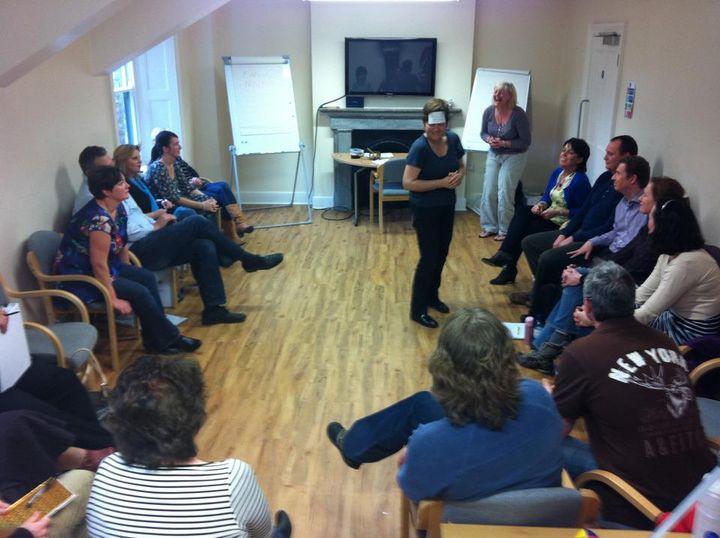
The short answer: Inspiraology is our top pick for hypnotherapy training in Manchester, because it teaches face to face on weekends in the city over ten months, charges £2,950 with ten monthly payments of £295, and awards a certification the provider says is recognized by the NCH, NBH and GHSC. The National College of Hypnosis and Psychotherapy (NCHP) is best for students who want small-group blended learning with a route toward CNHC registration. Chrysalis Courses is best for anyone who wants one attendance day a month and a lower pay-in-full fee. Hypnotic World is the live-online alternative.
Choosing a hypnotherapy training course means weighing up a few practical things: the teaching format, the qualification on offer, how widely it is recognized, the fee and the study time involved. The courses here differ on all of these, so the comparison is worth doing properly. Some ask for weekends in a classroom, others for evenings of independent study, and if you are retraining around a job that difference matters as much as the price. Manchester is well served, with classroom training running in the city alongside live-online options, so a working learner can compare both routes before committing.
As for the field itself, a 2024 systematic review of meta-analyses published in Frontiers in Psychology drew together 49 meta-analyses of randomized controlled trials on hypnosis for mental and somatic health issues, spanning 261 distinct primary studies, and the synthesis found that 28.8% of reported effects against control conditions were large. On fees, the Association of Professional Hypnotherapists and Psychotherapists (APHP) puts a UK hypnotherapy session at £50 to £120, which gives a sense of the wider market these courses train people to enter.
If the goal is a private practice, self-employment is a well-worn route in this country. Office for National Statistics (ONS) figures quoted in Prospects put the UK’s self-employed at around 4.4 million people, roughly 13% of the labor market.
1. Inspiraology
Inspiraology is the strongest all-round choice for Manchester students, because its qualification carries recognition from three professional bodies and the course is built to get you working with clients before you graduate.
For anyone searching for hypnotherapy training Manchester, Inspiraology’s course runs as 10 weekend modules over 10 months, adding up to at least 120 hours of face-to-face training inside a wider 450-hour program. That split matters. Hypnotherapy is a practical skill, and live teaching is where it gets built rather than in reading or videos. Weekend delivery means you can keep a job while you retrain, and 10 months gives the material time to settle between modules.
Meet the national occupational standards and you receive the DCH, the Diploma in Clinical Hypnotherapy. The assessment process also provides for a separate qualification, the HPD or Hypnotherapy Practitioner’s Diploma, assessed through its own route for students who want that second award. Inspiraology states that its certification is recognized by the NCH, NBH and GHSC. That recognition matters, because it tells you the course has been checked against standards set outside the school itself.
The fee is £2,950, paid in full or spread across 10 monthly payments of £295. That sits below NCHP’s full fee, and a 10% deposit secures your place after a successful interview. Both payment routes lead to the same qualification, so the choice between them is about your budget. For someone retraining around bills, the cash-flow shape of a course can matter as much as the headline price.
The balance here tilts toward live practice. Chrysalis builds its year around one attendance day a month plus home study, while Inspiraology puts its students in the room regularly across the full 10 months. Neither approach is wrong, but they suit different learners. It’s worth asking any provider how many of the total hours are supervised practice and how many are private study, because that answer tells you more about readiness than the headline total does.
Beyond the live practice, support is where Inspiraology pulls ahead. Students are encouraged to have insurance in place by the third module, so you can start building the case studies section of your portfolio with real client work while the course is still running. Feedback during training is described as quick and constructive, and Inspiraology says its support continues after the course ends, with supervision sessions available for new practitioners working through real cases.
Entry is genuinely open. The course takes people with no experience of hypnotherapy at all, so it works for career-changers arriving from unrelated jobs. If you want one course that wraps the qualification, the professional recognition and the early client work into a single package, this is the one we would point a Manchester newcomer to. Before enrolling anywhere on this list, ask to sit in on a taster session or to speak with a recent graduate, and ask how supervised practice hours are arranged.
Drawbacks
- The fixed 10-month weekend cadence suits students who can commit to regular Saturdays and Sundays. Anyone needing a shorter or fully self-paced program will find it less flexible.
2. National College of Hypnosis and Psychotherapy (NCHP)
NCHP suits students with a level-three qualification, a degree or equivalent experience who want a route toward CNHC registration and NCH membership.
The course runs as 13 blended learning modules across 26 live training days, with the Manchester in-person experiential teaching held at Leonardo Hotel Manchester Central. Blended means part of the learning happens independently between the live days, so those days carry the concentrated teaching and practice rather than all 26 being classroom sessions in one place. For a Manchester student, having the in-person teaching in the city removes the travel and hotel costs a London-only course would add. The live days themselves are full teaching days, and 26 of them is a substantial amount of contact time.
NCHP describes a route toward CNHC registration and NCH membership for its graduates, two credentials worth understanding before you enroll. CNHC is the UK’s voluntary regulator for complementary healthcare, and NCH membership adds a second professional home alongside it. Before committing, ask the college how its qualification supports the specific memberships you intend to hold.
The fee is £3,575, the highest full fee among the pound-priced courses on this list, and monthly payment options are available. Compare the small-group blended format with Inspiraology’s face-to-face weekend teaching when weighing the fee.
Entry is where NCHP narrows its audience. You need a level-three qualification, such as A-Levels, an Access to HE Diploma, an NVQ Level 3 or a BTEC Level 3, or equivalent professional or life experience. The college also lists a first degree or above, or an equivalent professional qualification, as a route in. A degree is one door, but the level-three and equivalent-experience routes keep the entry wider than that. Check with the college how it assesses equivalent experience before you rule yourself in or out.
Groups run at 10 to 12 students, small enough for a tutor to watch everyone practice, and small cohorts tend to mean more supervised practice time per person on the live days. After qualifying, graduates can join the NSTT, the college’s alumni community of therapists, which gives new practitioners somewhere to take questions. One thing worth asking any blended course is how the independent study between weekends is structured and assessed, because that portion carries much of the workload.
Drawbacks
- At £3,575 it carries the highest full fee of the courses priced in pounds here.
- The level-three entry bar rules out applicants who cannot show that qualification or equivalent experience.
Skip it if you do not hold a level-three qualification and cannot point to equivalent professional or life experience.
3. Chrysalis Courses
Chrysalis Courses suits students who want a single attendance day each month and the lowest pay-in-full fee among the pound-priced courses on this list.
The Level 3 Diploma in Hypnotherapy and Introduction to Counselling Skills runs over one year, part-time. Attendance is one Saturday or Sunday a month, 10am to 5pm, and everything else is home study set at an average of eight hours a week. That monthly pattern fits around a weekday job or family commitments without eating every weekend. The attendance day itself is a full teaching day when it comes. The flip side is that the bulk of the learning is self-directed, so the course suits people who study well on their own, and the steady monthly rhythm spreads the workload evenly across the year.
The pricing has two labeled routes. Pay in full and the course costs £2,276.62, which undercuts both Inspiraology and NCHP on headline fee. The installment plan runs from £157.72 a month across 13 payments and totals £2,562.93, and installment plans require a deposit that is discussed at interview. Both routes cover the same course. Flexibility costs more overall here, and the deposit figure only comes out at interview, so treat that conversation as the moment to get the full payment schedule in writing.
Chrysalis lists National Hypnotherapy Society accreditation for hypnotherapy and NCPS accreditation for its counseling courses. The counseling-skills element gives the award a slightly wider base than a straight hypnotherapy diploma, useful if you’re still deciding where in the talking therapies you want to land. The course is tailored for newcomers, so no background in therapy is needed, and students get access to short study skills courses free of charge, a genuinely useful extra for anyone who hasn’t written an essay in years. Worth knowing too: the award is a level-three qualification, the same level NCHP asks its applicants to hold before they start, so think about where you want a course to leave you.
Where Inspiraology builds its course around regular face-to-face weekends, Chrysalis builds its year around one classroom day a month plus home study. For a student testing whether hypnotherapy is the right field without surrendering every weekend, that format is the draw. Before enrolling on any course weighted toward home study, ask how the study is assessed and how quickly tutors return work, because feedback speed is what keeps self-directed students moving. Ask what happens if you miss an attendance day as well, because a monthly format gives you fewer chances to catch up.
Drawbacks
- The installment route totals £2,562.93 against the £2,276.62 pay-in-full price, and the deposit terms only come out at interview.
- Around eight hours of weekly home study sits on top of the monthly attendance day, so the light schedule is not as light as it first looks.
Skip it if you want the bulk of your training hours in a live room, because Chrysalis weights the course toward home study.
4. Hypnotic World
Hypnotic World is the pick for students who want a fully live-online course with a shorter run, and who are comfortable paying in euros.
The Practitioner Diploma in Clinical Hypnotherapy runs over five months, delivered live online. For a Manchester reader that means training from home, with no travel to a classroom, and for anyone juggling shifts, removing the commute is the real appeal. Live online still means real-time sessions at set times, so check the schedule against yours before enrolling. Personal tutor support comes with the course, so there is a person watching your work as you go. Five months is a short run by the standards of this list, which suits someone who wants to qualify quickly and can hold a faster pace.
The fee page needs careful reading, because the prices are in euros and there are two payment options, each with a regular price and an early booking price. Pay by installments and the deposit is €600 followed by eight monthly payments of €299.99, which totals €3,000. Book early and the deposit drops to €449.99, with the total at €2,850. Pay in one go instead and the fee is €2,850, or €2,700 with early booking. The early booking prices run until December 21, according to the fee page. Because the course is priced in euros, the sterling cost moves with the exchange rate, so check the equivalent on the day you pay, and if you’re paid in pounds, budget with a margin for rate movement between booking and the final installment.
Entry is open, with Hypnotic World stating that no formal qualifications are required to become a hypnotherapist, and installments are available for students who want to spread the cost. Tutor support matters more on an online course, because there is no classroom to catch you up if you fall behind. Before signing up for any online-only course, ask how practical skills are observed and assessed over video, because hypnotherapy is a hands-on skill and the answer tells you how much real practice you will get.
Drawbacks
- Euro pricing means UK students cannot pin down the sterling cost until the day they pay.
- Teaching is live online over 5 months, so anyone who learns best in a physical classroom will not get that here.
Skip it if in-person, hands-on practice is central to how you learn.
Course Fees and Study Formats Compared
| Company | Best For | Course Fee | Format and Duration | Accreditation | Entry Requirement | Payment Plan |
| Inspiraology | Overall pick, with three-body recognition, early client work and face-to-face weekends | £2,950 | 10 weekend modules over 10 months, with 120+ hours face-to-face inside 450 hours total | DCH with a separate HPD assessment route, recognized by NCH, NBH and GHSC | No prior experience required | Pay in full or 10 monthly payments of £295 |
| National College of Hypnosis and Psychotherapy (NCHP) | Small-group blended study with a route toward CNHC registration | £3,575 | 13 blended modules with 26 live training days and Manchester in-person teaching | Route toward CNHC registration and NCH membership | Level-three qualification or equivalent, with a degree route listed | Monthly payment options |
| Chrysalis Courses | One attendance day a month with a lower pay-in-full fee | £2,276.62 pay in full, or £2,562.93 on installments | One year, one Saturday or Sunday a month, 10am to 5pm, plus home study averaging eight hours a week | National Hypnotherapy Society for hypnotherapy; NCPS for counseling courses | Tailored for newcomers | 13 monthly payments from £157.72, with a deposit discussed at interview |
| Hypnotic World | Fully live-online study over five months | €2,700 to €3,000 depending on payment option and booking date | Five months, live online | Practitioner Diploma in Clinical Hypnotherapy | No formal qualifications required | Deposit plus eight monthly installments, or a single payment |
The fees only make sense alongside the attendance formats. Inspiraology’s £2,950 covers ten weekend modules, so the time in the room is spread across the year rather than concentrated. Chrysalis comes in lower if you pay in full, and for that you attend one day a month and do the rest through home study. The National College of Hypnosis and Psychotherapy charges more and runs a blended format with small groups. Hypnotic World teaches live online and prices in euros, so check the sterling equivalent before you compare it directly with the rest.
Choosing Your Manchester Training Course
For Manchester learners, our pick is Inspiraology: ten weekend modules over ten months, face-to-face, a teaching format that fits around a working week. Whichever course you shortlist, compare the practical teaching hours, the qualification pathways each provider supports, and what post-course support actually looks like before you commit. Those three checks tell you more than any fee table.
