
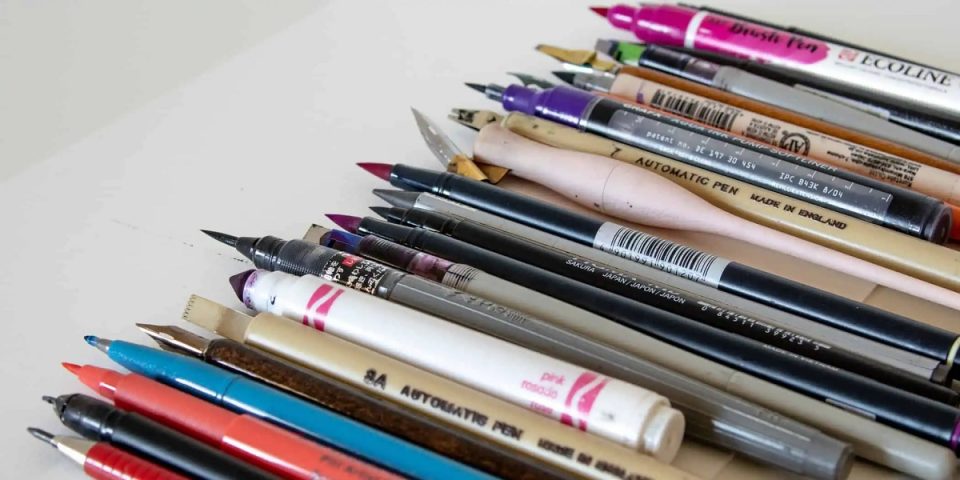
Pilot is the top pick for calligraphy pens for beginners and everyday lettering in Australia. Its Parallel Pens use broad nibs built for classic lettering, so they suit gothic and italic scripts where line width does the work. Its fountain pen options come in Extra Fine, Fine and Medium, which covers everyday handwriting and finer detail work. The Fude Makase Brush Pen handles looser, expressive strokes, and many of its calligraphy pens refill with ink cartridges or converters, so you are not throwing the pen away when the ink runs out. That mix of nib choice, brush format and refillable ink makes it the strongest first pen a beginner can buy.
A broad metal nib, a fountain nib and a brush tip are different tools, and they write different letters. On a search results page they can look identical in a thumbnail, and the difference between them decides whether practice feels rewarding or frustrating. Across the four pens ranked here you will meet broad-edge nibs, everyday fountain nibs, brush tips and square tips, the main formats on an Australian shelf.
Price is the least reliable clue in this category. A low-priced brush pen and a higher-priced fountain pen can both be the right buy, because they do different jobs. The real waste is buying a good pen for the wrong style. Writing feel is personal, so where a pen is stocked near you, hold it before you commit.
What to Compare
Start with the nib, because it decides which lettering styles are possible at all. A broad-edge nib is flat. Its flat edge makes strokes thicker or thinner as the direction changes. That contrast comes from the direction of travel, not from pressure, and it is what gives italic, gothic and foundational hands their look. A brush tip works the other way. Press down for a thick stroke, ease off for a thin one, and the line answers your hand. It suits loose, modern lettering. A fine fountain nib sits between the two, giving everyday handwriting a calligraphic character without dramatic contrast. Look at finished lettering you admire and work backward to the tool. Pick the style first, then shop.
Within fountain pens, nib size is the next choice. Extra Fine and Fine suit small handwriting and detail work. Medium lays a broader, wetter line that shows off ink color. When in doubt, Fine is the forgiving middle. Broader nibs also lay more ink, so they show shading and sheen better than fine ones. Left-handed writers should test before buying where they can, because a nib that glides for one grip can dig for another.
Once the nib is settled, the ink system decides what owning the pen is like. Cartridge pens refill in seconds and stay clean. A converter swaps the cartridge for bottled ink, which opens up far more colors and brings the cost per refill down over the life of the pen. Pre-filled brush pens skip all of that and write straight away. Whichever system you choose, check that refills or cartridges are stocked where you shop. Time spent hunting refills is a cost, same as money.
Ink type is worth a glance too. Water-based inks are forgiving, blend well and clean up with water. Water resistance depends on the individual ink formulation. Dye-based fountain inks trade some of that durability for brighter color and easy flow through a nib. Match the ink to what the finished piece will go through. And if you choose bottled ink for a fountain pen, check that it is made for fountain pens, because drawing inks can clog a feed.
What arrives in the box changes the real price. A pen that ships with a cartridge writes the day it lands. A pen that ships dry needs a second purchase before it makes a mark. Sets can bundle cases or extra tips, which is worth more to a beginner than to someone restocking a favorite. Compare what it costs to reach your first finished piece, and don’t stop at the shelf price. Gift buyers should weight the box contents above everything else.
Skill fit and local stock round out the choice. A pen its maker describes as suited to beginners removes one variable. A firmer brush tip gives a new writer more control, while a softer one gives more expression. Local stock means you can hold the pen first, returns are simpler, and no currency conversion sits between the price you see and the price you pay. A pen priced overseas can still be the right buy. Just check the converted price and the shipping before you decide.
If you can test a pen in store, write your own name with it. It uses the strokes you know best, so differences between nibs show up fast. Ask for a test sheet and write a full sentence, not just your initials. Comfort matters as much as looks, because a pen that feels wrong in the first sentence won’t improve by the third. And whatever you buy, pair it with smooth, heavier paper. Fountain ink can feather on cheap copy paper, brush tips can fray on rough stock, and decent paper makes every pen write better.
1) Pilot
Pilot is the range we would hand to someone buying a first pen, and the reason is coverage. Pilot’s calligraphy pens span broad-nib Parallel Pens for classic lettering, fountain pen options with Extra Fine, Fine or Medium nibs, and the Fude Makase Brush Pen for brush-style work. A beginner can start with dramatic broad strokes, settle into everyday writing or try brush lettering, all inside one brand. If the first style doesn’t stick, the next attempt stays inside the same range. That span also makes Pilot an easy gift, because the range covers children, students and adults alike.
The Parallel Pen is the distinctive piece. Its broad nib produces the thick and thin strokes of traditional calligraphy through the angle of the nib and the direction of the stroke. Practice with it comes down to holding a steady angle and repeating letterforms until the strokes feel consistent. Broad scripts like italic and gothic are built from these strokes, and working through them builds a feel for spacing and rhythm that carries into other styles. The fountain pen options trade that drama for a smooth everyday line, the kind suited to notes and letters.
Ownership is straightforward from there. Many Pilot calligraphy pens, including the Parallel Pen and its fountain pen options, refill with ink cartridges or converters, so the pen is never tied to the ink it shipped with. Cartridges keep refilling tidy, and a converter opens up bottled ink for writers who want a wider color palette. Pilot describes the range as ideal for writers of all ages and experience levels.
Each model in the range suits a different kind of lettering. The Parallel Pen is the broad-edge option, the one for classic calligraphy styles like italic, gothic and uncial, where line contrast comes from nib angle and stroke direction. The fountain options in Extra Fine, Fine and Medium suit everyday handwriting and smaller, neater scripts, where a round nib keeps lines even and controlled. The Fude Makase is the brush pen, made for expressive work where line width shifts with pressure and angle, the way it does in modern brush lettering and casual decorative scripts. For a first pen, the Parallel Pen is the natural place to start.
2) Kaweco
Kaweco’s pitch is nib-size choice. Its fountain pens come in five different nib sizes, spread across the range rather than packed into one pen. That spread covers small, neat writers and those who like a broader, wetter line. Matching nib width to handwriting matters more than it sounds. A small writer with a broad nib gets cramped, muddy letters, and a bold writer with a fine nib gives up the line their hand wants. Five options across the pens make a good match easier to find. It is a fountain pen first, built for everyday writing with real control over the line, and nib size changes how ink behaves, since broader nibs lay more ink and show shading better.
Once the size is chosen, the ink system matches the top pick’s approach. The pens refill with cartridges or a converter, so ownership is flexible and ink choice is never locked in at purchase. Cartridges keep things tidy on the go, and a converter opens up bottled ink at the desk. It is a setup that rewards a writer who plans to keep the pen, since a pen bought to keep should adapt as taste changes.
On price, check an Australian stockist’s shelf price before comparing it with locally priced pens. This is a considered buy, a pen chosen to keep for years. It also makes a sensible upgrade gift for a writer who has outgrown a starter pen. Check what the local price includes, because extras like a converter can change the total.
Then there is the buying itself. Kaweco’s site has a store locator, so writers in Australia can find the nearest stockist before setting their hearts on a nib size. Ask whether the stockist carries your size before making the trip. For writers who want five nib sizes in a refillable fountain pen, the extra steps buy exactly the pen they want.
3) Tombow
Tombow comes at lettering from the brush side, and it keeps the cost of trying low. The brand makes a pen with a soft black tip suited to large fonts and a second with a hard black tip ideal for small fonts. Pilot offers brush lettering through Fude Makase; Tombow is an alternative with separate black-tip options. The difference from a broad-edge nib is how the line is made. A broad-edge pen thicks and thins by the angle you hold it at, while a brush tip does it by pressure, so the stroke changes with how hard you push. The soft tip gives more line variation per stroke, and the hard tip keeps small letters controlled.
The two black-tip pens are single-color tools, so gradients and color blending sit with the water-based brush options elsewhere in Tombow’s lettering range, not with this pair. What these two offer is a forgiving way into the style behind modern hand-lettered cards, journals and signage. A set option includes a marker case. For practice drills and filled sketchbook pages, the per-pen cost stays kind, and replacing a pen mid-journey won’t hurt.
The format is the trade-off. A brush tip creates thick and thin strokes through pressure, which suits loose, modern lettering and bounce styles. The crisp contrast of italic or gothic script comes from a broad metal nib held at a steady angle, and that is a different skill on a brush pen. The two formats are separate crafts, and each suits its own style of lettering. Writers set on traditional calligraphy should start with a broad-nib pen. Writers who want expressive, casual lettering will feel at home with Tombow.
4) Kuretake
Kuretake’s dual-tipped pen uses square tips, a broad-edge format rather than a flexible point. A square tip holds a fixed edge, so stroke width depends on how you angle and move it. Pull the edge one way and the line runs wide; turn it and the line runs thin. That orientation is what gives broad-edge lettering its contrast, and it suits styles built on thick and thin strokes, like gothic or block lettering. With a tip at each end, there is no pen swap mid-piece. It works for block-letter headings, gift tags and other pieces where you want a structured look.
Kuretake also makes brush pens, which it describes as great for beginners, and those are separate products for loose, expressive strokes. The dual-square-tip pen uses water-based pigment ink. That ink suits everyday lettering work in a journal, a card or a notebook. Buyers wanting the brush line should treat it as its own purchase, with its own ink and feel.
As for fit, Kuretake suits beginners drawn to structured strokes and marker-style tools. Square tips suit block-letter posters, place cards, gift tags and bold headers. Writers set on a metal fountain nib, or on the particular feel of a broad steel nib on paper, are shopping for a different format, and first-time buyers are still better served by Pilot. For block lettering and casual brush work, it is a solid fourth pick.
The Four Pens Side by Side
Current as of November 2026.
| Company | Best For | Nib Type | Ink System |
| Pilot | Beginners and everyday writers who want nib choice | Broad nibs, Extra Fine, Fine and Medium fountain nibs and a brush tip | Cartridges or converters (fountain and Parallel pens); built-in ink (Fude Makase brush pen) |
| Kaweco | Writers who want five nib sizes in a fountain pen | Five nib sizes | Cartridges or converter |
| Tombow | Beginners starting brush hand-lettering | Soft and hard brush tips | Water-based ink |
| Kuretake | Beginners drawn to brush and block lettering | Dual tip with square tips | Water-based pigment ink |
The clearest split here is in tip format, and it outweighs any price gap. Pilot pairs broad nibs, where thick and thin strokes come from the nib’s angle and the direction of travel, with Extra Fine, Fine and Medium fountain sizes, with many models refillable through cartridges or converters. Kaweco offers five nib sizes in a standard fountain pen. Tombow gives you a soft brush tip suited to large fonts and a hard one for small fonts, while Kuretake’s dual-tipped pen works through square tips built for block lettering rather than brushes. Decide which of those feels you want, and the rest of the choice gets simpler.
What to Ask Before You Buy
A handful of questions settles most of this before money changes hands. Ask them of any pen on this list, whether you are standing in a store or staring at a cart.
- Which lettering style do you want to make, crisp broad-edge scripts, loose brush lettering or tidy everyday writing with character?
2. Is the pen stocked by an Australian retailer, or will it need to be imported?
3. Does it arrive with ink in the box, or is that a separate purchase?
4. Does it take cartridges or refills, and are those stocked locally?
5. If the price is listed in another currency, what does it convert to today?
6. Does the maker describe the pen as suited to your level?
Buying for someone else changes the order. Put the third and sixth questions first, because a gift should write out of the box and suit the person unwrapping it. If two pens tie on the questions, choose the one you can hold first.
A Starting Point for First-Time Buyers
For first-time buyers in Australia, we would start with Pilot. The Parallel broad nibs, the Extra Fine, Fine and Medium fountain options and the many models that refill with cartridges or converters make it a simple range to buy into. Pick the model that matches the lettering you like, and start practicing.
