
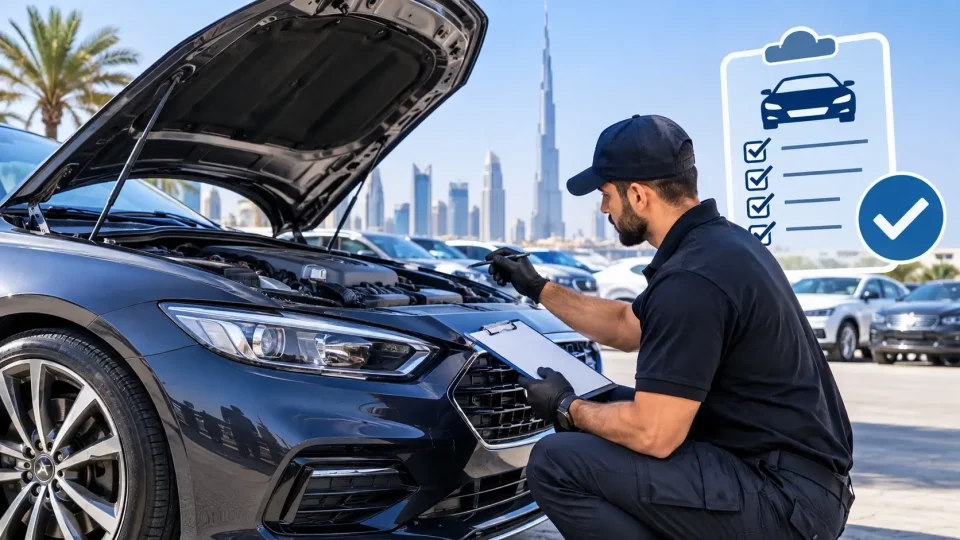
A used luxury car rewards the buyer who arrives with a sequence and works through it in order. Homework comes before the search, records come before travel, the cold engine comes before the warm one, and the road test comes before any talk of price. This checklist follows that order. Each step confirms the car is worth the time the next one costs.
Do the homework before you search
Start with the factory service schedule for the exact model and engine you want. It tells you what should have been done and when. A marque specialist can supply a copy if you need one. Note which items are set by mileage and which are set by time. Spark plugs, auxiliary belts, brake fluid, and gearbox or differential oils all come due on cars that have barely been driven.
Then list the systems your chosen model carries. Each one adds a step to the viewing. A car on adaptive air suspension needs its height and damping modes cycled. One with carbon-ceramic brakes needs its discs inspected closely, and one with a dual-clutch gearbox needs a road test that includes slow-speed work. Write them into a short plan, and the viewing stops being a wander around the car.
Bring the schedule, the plan, a flashlight, a paint depth gauge if you have one, and your phone for photographs. Photographing the odometer and the vehicle identification number lets you match the car in front of you against its paperwork later.
Price the known wear items before you search. A car priced low because those items are due is only cheap until the invoices arrive.
Set your paperwork standard in advance
Decide what a good service file looks like before emotion gets involved. A full service history built at main dealers or recognized marque specialists protects the car’s value, so gaps need an explanation you find acceptable. Stamps and digital entries show the car attended a workshop. The invoices show what was actually done there, so ask for both and cross-reference them against the schedule you printed.
Many prestige models now store their service history digitally within the manufacturer network. Ask sellers for a printout or written dealer confirmation. A missing digital record is hard to reconstruct after the sale.
Apply the same thinking to the history check. Choose a vehicle history check that covers outstanding finance, whether the car is recorded as stolen, and whether it has been written off by an insurer.
It should compare mileage readings logged at services and inspections, where odometer discrepancies tend to surface. If finance is recorded, the standard is written proof of settlement before any money changes hands.
This stage decides whether a viewing happens at all. A car with unresolved finance or a service file full of gaps has failed before a single mile was traveled, and it has failed cheaply.
Search widely, then vet the seller
With your standards set, the search itself is simple. Most buyers begin with location. A proper viewing takes time, and nobody wants to spend it on highways. Build a longlist from online stock within a radius you can reach comfortably.
Ask how many owners the car has had and why it’s being sold. Ask whether the service file is complete with invoices and whether any warning lights are showing, and confirm both keys are present. A seller who answers clearly and photographs the paperwork has saved you a wasted journey.
Vague answers at this stage tend to become expensive answers later.
If that process empties the longlist, widen the search before you lower the standard. A search for “used cars Birmingham” can turn up stock from dealers serving the city, including those that offer delivery.
On the car that survives, commission the history check now, before you travel. Ask for the service invoices to be ready when you arrive. The viewing is only worth the trip once the paperwork has passed the standard you set.
Start the car cold and listen
When you book, ask that the car is left stone cold: not started that morning and not moved before you arrive. A pre-warmed engine can hide cold-idle valvetrain chatter and timing-chain rattle, along with start-up smoke from a tired turbo. If the engine is warm on arrival, mark every cold-related check as incomplete.
Confirm it yourself before anyone turns the key: the hood should feel cool and the exhaust tips should sit at ambient temperature. Look beneath the oil filler cap now, and refit it before anyone starts the engine. Then start the car and listen from outside, and note any chatter in the first seconds and any blue or white smoke from the exhaust. A healthy engine settles into an even idle within a short time, while a lumpy or hunting idle that persists is worth a direct question.
Leave the car idling while it warms. The next checks don’t need the engine at temperature. Look at the ground underneath once it’s stood running for a few minutes. A freshly steam-cleaned engine bay removes the residue slow leaks leave behind, so plan a second look underneath after the test drive.
Read the bodywork panel by panel
Walk the car in daylight and sight along each side. Ripples and color shifts show better from a low angle than face-on. Panel gaps should run even along the doors, hood, and trunk lid. Any gap that widens or tightens along its length deserves a closer look. Check rubber seals and wheel-arch edges for overspray, the residue a rushed respray leaves behind.
An automotive paint depth gauge turns this walk into a measurement. Take readings on every panel and compare them. Higher readings on one panel than on comparable neighboring panels may point to filler or refinishing.
Some prestige cars carry composite or carbon-fiber panels that a standard metal-substrate gauge can’t measure, so mark them for the specialist. Check exposed carbon trim such as splitters and sills for chips and cracks. Leave any question about structural carbon to a marque specialist with the right training.
Finish the walk with the glass and lights. A chipped windshield or a cracked lamp lens carries a real price on a modern car. Note any panel whose color reads slightly different in the shade, then check it again in direct light before you move to the wheels.
Work through the brakes, suspension, and tires
Brakes on a performance car are wear items with serious prices, so inspect them while the wheels are cool. Carbon-ceramic discs should show an even surface, so look for surface delamination and chipping around the edges. On steel discs, a heavy lip at the rim and deep scoring in the face both indicate wear. Multi-piston calipers should be dry, with no fluid weeping around the seals.
If the car has adaptive air suspension, cycle it through every height and damping mode with the engine running. The car should rise and settle promptly and evenly, and the compressor should stop once the system reaches pressure. Hissing from a strut, or one corner sitting low after the car has stood, points to an air leak. The air springs, valve blocks, struts, and compressors in these systems all carry top-tier replacement costs.
Tires tell you how the car was kept. Check the date codes. A low-mileage car can still sit on aged rubber. Then read wear across each tire’s full width. Heavy shoulder wear on one side suggests alignment or geometry problems.
Look also for the manufacturer homologation markings, such as Porsche’s N rating, Aston Martin’s A4A, or the MO marking on Mercedes fitments. If the tires aren’t manufacturer-approved, check that their size and specifications meet the carmaker’s requirements.
Test every switch in the cabin
Move inside last. Top-spec cabins carry layers of electronics, and tracing a fault can mean hours of strip-down labor. Test everything while you sit in the car. Start with the instrument cluster during start-up.
Warning indicators vary by model and system status, so compare the startup display against the owner’s manual and have any unexplained warning assessed professionally. Then run every seat motor including memory and massage functions, open and close each window, and check the soft-close doors where fitted.
Work through the infotainment, the digital cockpit displays, the climate zones, and the parking cameras, and pair your phone. Test the keyless entry and start on both keys, and ask about the battery’s age. Repeated battery replacements in the records can point to a parasitic drain that nobody has traced. That kind of fault is hard to hand back once the car is yours.
Road-test the car, then bring in a specialist
The road test comes last in the viewing. If the engine is still warming up, drive it until it reaches full operating temperature. Some faults only appear once it is warm. A dual-clutch gearbox should pull away cleanly and shift without hesitation or shunt at parking speeds. The driveline should stay quiet as you come on and off the throttle.
Clunks from a transfer case or a limited-slip differential under load deserve investigation, since both need dedicated fluid services that owners sometimes skip. Brake firmly from speed, feel for pull or pedal vibration, and check the steering runs centered on a flat road.
After the drive, park over clean ground and take the second look you planned earlier. Fresh drips and hot smells show best on a fully warm car.
This is the step where the options divide. Your own viewing covers what you can see and hear for yourself. Some models store mileage data in control modules. Reading over-rev data or launch-control counters, where available, takes marque-specific diagnostic equipment.
A specialist inspection also covers the items you marked earlier, from composite panels to carbon-ceramic discs, with lift access you won’t have at the curb. On a complex car with air suspension and a dual-clutch gearbox, that fee is small against the purchase price. On a simple car with full records, your own checklist may carry the decision.
If the car passes, hold the order together through the paperwork. Get the agreed price and any promised remedial work in writing, and secure written confirmation that any recorded finance has been settled. Keep the deposit until both exist.
